

Simple Fax-Send Fax from Phone
Easy inc.
I tested Simple Fax-Send Fax from Phone as a practical business tool rather than as something I would open every day. Its purpose is easy to understand: send documents, photographs, and receipts by fax from an Android phone. That narrow focus is useful when a company, clinic, landlord, insurer, or public office still expects a fax and I am away from a traditional machine.
My overall impression is that the app is most valuable when convenience matters more than building a complete document-management system. I can see why it has earned a 4.6 average from around 21 thousand ratings and more than 500 thousand installs. It removes the need to find a physical fax machine, scan a paper separately, and wait beside office equipment. At the same time, it is not a universal replacement for email, cloud sharing, or a dedicated office fax service.
How Simple Fax fits into real work
A straightforward starting point for occasional faxing
The app comes from Easy inc. and is listed as a free Business app for everyone. It runs on Android 7.0 or later, which makes it available on many older phones as well as newer devices. The current version is 5.7.1, so users with compatible Android phones can approach it as a focused utility rather than learning a large office platform.
The first strength is its clear job. Instead of presenting a crowded workspace, it centers the experience around sending material from the phone. That matters for someone who only faxes a few times a year and does not want to understand servers, desktop drivers, or office hardware. I would particularly recommend it to a self-employed person handling paperwork from home, a student sending an administrative form, or a small business owner who needs a backup option while traveling.
A realistic example is a contractor who receives a signed receipt as a paper document during a site visit. The contractor can photograph it, check the image, and prepare it for faxing without returning to the office. Another example is a family member helping with an insurance or medical form from a different location. In both cases, the value is not that faxing becomes modern; it is that the phone becomes the place where the task can be completed.
Related News

Why WhatsApp Messenger Still Makes Everyday Communication Feel Easy

Jurassic World: The Game Is the Better Dino Tycoon for Strategic Players

Threads in Real Life: Who Should Join, Lurk, or Leave

How SHEIN Turned Shopping Into an Endless Content Feed

How to Make Fortnite Feel Smarter on Mobile

Should You Switch to Microsoft Outlook on Mobile?
Readability and navigation in the main workflow
I find the focused design easier to approach than a broad business suite. A person who understands the basic sequence—choose a document, review it, enter the destination, and send—does not need much technical vocabulary. That simplicity can help users who become frustrated by dense menus or unfamiliar office terminology.
There is also a practical readability advantage in working from a phone already configured to the user’s preferred text size and display settings. Android’s system-level adjustments can make surrounding controls more comfortable for people who need larger text or stronger contrast. The app should still be judged on its own screens, but its limited purpose gives it less room to become confusing than a feature-heavy productivity platform.
My advice is to prepare the source document before opening the fax workflow. Crop out unrelated desk space, straighten pages, and make sure small print is sharp. This is more than cosmetic: a readable original is easier to inspect on a phone and less likely to produce a poor fax. If the document contains several pages, I would review them in order before sending instead of assuming the capture process preserved everything correctly.
Gallery
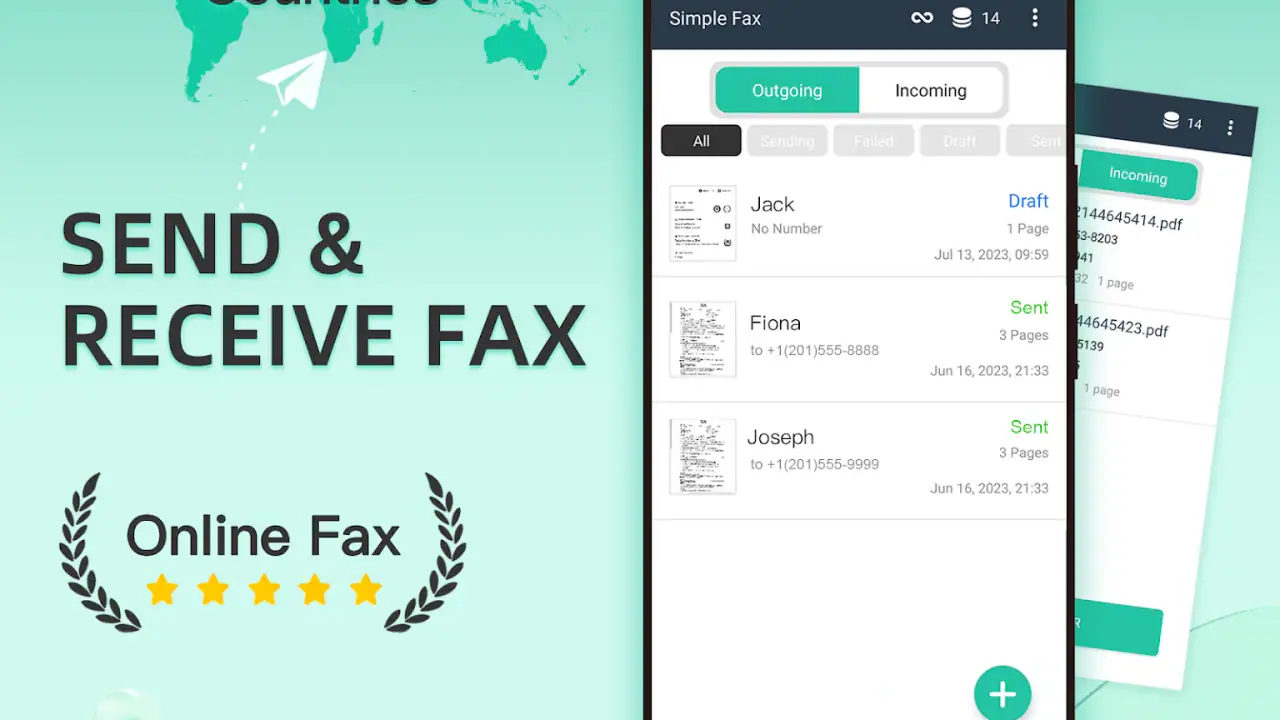
One useful habit is to keep the phone in a stable position while photographing receipts or forms. Hand tremor, glare, and curved paper can make a page look acceptable in the preview while leaving important text faint or distorted. This is an area where the phone camera and lighting have as much influence as the fax app itself. Users with limited vision may benefit from taking the photograph in good light and enlarging the preview before committing to the send step.
Motor and sensory considerations
Using a phone instead of a physical fax machine can remove several awkward actions. I do not need to feed pages into a machine, reach across a desk, or operate a separate scanner. For someone with limited mobility, that can make the overall task more manageable, especially when the phone is already within reach and the document is available as a digital file.
However, the mobile workflow is not automatically accessible for every user. Capturing a paper document may require holding the phone steady, positioning the page, tapping small controls, and checking visual details. Someone with hand tremors or reduced dexterity may find camera alignment more difficult than operating a desktop scanner. A helpful workaround is to use an existing PDF or image whenever possible, because it avoids the most demanding part of the process.
People with low vision should not rely on a quick glance at a receipt or form. I would zoom into signatures, account numbers, dates, and other critical areas before sending. If the app’s preview is difficult to inspect, Android’s magnification tools or a second person’s review can provide an important safety check. This is especially relevant for documents where a single missing character can cause rejection.
For users who are sensitive to bright screens or visual clutter, the short workflow is preferable to a busy office application, but the phone itself remains the main interface. Voice input may help with entering a destination number, although I would carefully verify every digit because dictation errors are easy to miss. The app’s value here is flexibility, not a guarantee that every interaction will suit every ability.
Situational access when the office is unavailable
The strongest accessibility benefit is situational. I can use the app from home, from a vehicle parked safely before a meeting, or while traveling for work, provided the phone and connection are ready. That helps people who cannot easily reach a shared office machine, who work irregular hours, or who need to respond to paperwork outside normal business routines.
It is also useful for reducing dependence on a particular physical location. A small shop may not own a fax machine, and an independent worker may not want to visit a print-and-copy store for one document. Sending from a familiar phone can be less intimidating than asking staff to handle private paperwork. The app therefore supports independence in a very practical way, even though it remains tied to the requirements of the receiving organization.
There are privacy decisions to make before using it. A fax can contain medical, financial, employment, or identity information. I would avoid preparing sensitive pages in a public place, check that the correct recipient number is selected, and keep the phone screen from being visible to people nearby. Convenience should not encourage careless handling of confidential documents.
Travel is another situation where expectations need to stay realistic. The app can remove the need for local fax hardware, but it does not remove the need for a usable phone, a suitable connection, and a destination that accepts fax. If the recipient requires a cover page, a particular page order, or a clearly signed original, I would prepare those details before starting rather than discovering the requirement after sending.
Costs and the trade-off with traditional alternatives
The app is free to install, which makes trying the basic workflow less of a commitment. It also includes in-app purchases ranging from $0.99 to $149.99 per item. That range is important because “free” does not mean every faxing situation will remain cost-free. Before sending an urgent or lengthy document, I would inspect the purchase screen carefully and confirm what the selected option includes.
For occasional use, paying for a single task may still be more convenient than buying a fax machine, maintaining a phone line, or traveling to a service counter. For frequent business faxing, however, the economics and record-keeping deserve closer attention. A subscription-based online fax provider or a business communications service may offer a more predictable process, centralized history, and easier administration for a team.
Email is usually better when the recipient accepts attachments. It is easier to keep a copy, add a message, and continue a conversation. Cloud sharing can be better for large files or collaborative review. A physical fax machine remains preferable in an office that sends many pages every day, especially when several employees need shared access and a dependable paper workflow.
Simple Fax makes the most sense in the gap between those options: I need to send a modest amount of paperwork, the recipient insists on fax, and I do not want to depend on office equipment. That is a narrower use case than the broad label of Business might suggest, but within that use case the phone-based approach is sensible.
Remaining barriers and points I would check first
The biggest barrier is the lack of control that comes with a compact mobile workflow. I would want to inspect every page, confirm the destination, and retain the original file until the recipient confirms receipt. A successful send attempt is not the same as confirmation that the other side has processed the document correctly.
Image quality is another possible weak point. A dark receipt, a folded form, or a page photographed at an angle can become difficult to read after transmission. Users who regularly work with fine print, multi-page contracts, or detailed diagrams may be better served by a proper scanner and a more formal fax service. The app is convenient, but convenience cannot repair a poor source image.
There is also a learning curve around payment expectations. A first-time user may assume that installing a free app means sending any document without a charge. Because the available purchases vary widely in size, I would treat the pricing screen as part of the decision rather than tapping through it quickly. This is particularly important for people managing a strict budget or using the app on behalf of someone else.
Older Android phones can be an advantage for compatibility, but hardware condition still matters. A weak camera, a small display, limited storage, or an unreliable connection can make the experience harder even when the operating system meets the requirement. Someone who struggles with small touch targets may also prefer preparing the document on a larger device and transferring it to the phone, if their personal setup allows that.
Finally, the app is not the right choice for users looking for a full document archive, team permissions, advanced business reporting, or a replacement for all office communication. Its focused nature is exactly why it is approachable, but that same focus limits how far it can serve a growing organization.
Who should use it, and who should choose something else?
I would recommend Simple Fax to people who fax occasionally and value being able to work from an Android phone. It is a good fit for independent workers, households handling administrative forms, and travelers who may suddenly need to send a receipt or document. The Everyone content rating also makes its intended audience broad, although the privacy of the documents still calls for adult judgment and careful handling.
I would be more cautious about recommending it as the main tool for a busy office. If a team sends faxes continuously, needs shared records, or must follow a strict approval process, a dedicated business service is likely the better option. Likewise, if the recipient accepts email, I would normally choose email first because it is simpler to review and easier to retain as part of a conversation.
For users with accessibility needs, I see the app as potentially helpful because it can eliminate a trip to a fax machine and reduce the physical handling of pages. I would still encourage a trial with a non-sensitive document. That lets the user check whether the text size, touch controls, camera workflow, and preview are comfortable before an urgent form is involved.
My inclusive verdict
Simple Fax-Send Fax from Phone succeeds by doing one useful thing in a place people already carry: the smartphone. In my experience, its strongest contribution is situational access. It can help someone work from home, avoid unfamiliar office equipment, or send a necessary document when traditional options are inconvenient.
I would not describe it as a complete answer for every faxing need. Users must still manage image quality, recipient accuracy, privacy, and the cost of in-app purchases. People with motor or visual challenges may need a steadier setup, magnification, voice assistance, or another person to verify the final document.
Even with those limits, I think it is worth considering when a fax is unavoidable and a physical machine is out of reach. The best reason to choose it is not that it replaces every business communication tool, but that it makes an occasional, location-sensitive task more reachable. For that specific job, the focused design and Android availability make it a practical option; for high-volume, highly managed, or email-friendly work, I would choose a more specialized alternative.
FAQs for Simple Fax-Send Fax from Phone
What is Simple Fax-Send Fax from Phone used for?
Simple Fax-Send Fax from Phone is designed to let you send documents as faxes directly from a mobile device. It can be useful for forms, contracts, receipts, identification documents, and other files that still need to reach a traditional fax number. Before sending, users can usually select a document, review its pages, enter the recipient’s fax number, and follow the app’s instructions to complete transmission.
Can I send a fax without owning a physical fax machine?
Yes. The main purpose of Simple Fax-Send Fax from Phone is to replace the need for a traditional fax machine, dedicated phone line, or office fax software. Documents can generally be prepared and submitted from an Android or iOS device. However, sending may depend on the app’s available service, internet connection, supported file types, and any credits or subscription required for the transmission.
Does Simple Fax-Send Fax from Phone cost money to send faxes?
You should check the current pricing shown inside the app or on its official store listing before sending an important document. Fax applications commonly use pay-per-fax credits, packages, subscriptions, or in-app purchases, and prices may vary according to the destination and number of pages. A download can be free while fax transmission itself may not be free.
What documents and file formats can I send with the app?
The app is intended for common business and personal documents, such as PDFs, scanned pages, images, forms, and photographs of paperwork. Exact compatibility can vary by device and app version, so it is best to confirm the supported formats before preparing a long fax. If you photograph a document, use good lighting, keep the page flat, and check that every word is readable.
Is Simple Fax-Send Fax from Phone safe for private or sensitive documents?
Because faxed files may contain personal, financial, medical, or business information, review the app’s privacy policy and permissions before using it for confidential material. Confirm the recipient’s fax number carefully, preview every page, and avoid sending sensitive documents over an unsecured connection. You should also verify delivery status and understand how uploaded files are stored, processed, or deleted.
Pros
- Send faxes directly from your smartphone without a fax machine.
- Supports document scanning with the phone camera.
- Allows files to be imported from common cloud storage services.
- Provides fax delivery status so you can track transmission progress.
- Useful for occasional faxing while traveling or working remotely.
Cons
- Fax credits or subscriptions may be required for frequent sending.
- Costs can become high when sending multi-page documents regularly.
- A stable internet connection is needed to submit and process faxes.
- Scanned pages may be unclear if lighting or camera focus is poor.
- Some features may be limited unless you create an account.


